
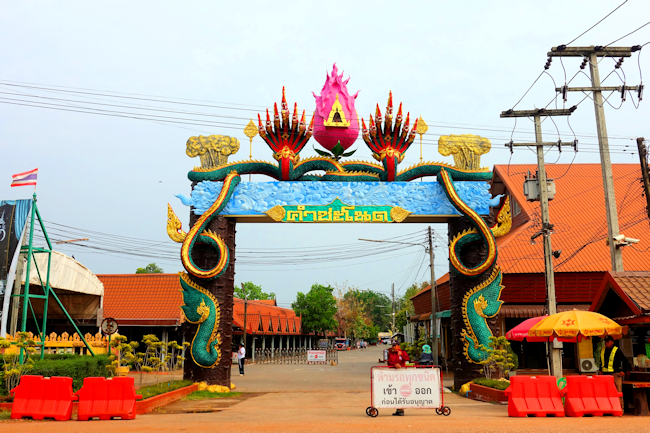

Kham Chanod (or Kamchanod Forest) is a sacred, mysterious 10-acre island packed with rare Taraw palms, regarded by locals as a legendary gateway to the Naga underworld.
(The Naga realm, known as Nagaloka or Patala, is a mystical subterranean or underwater kingdom in Hindu and Buddhist mythology inhabited by Nagas (serpent deities). It is often described as a luxurious, sparkling subterranean city, frequently associated with the Mekong River.)
It houses the shrine of Naga Lord Sri-Sudtho, attracting many visitors who pray for good fortune and lottery luck.
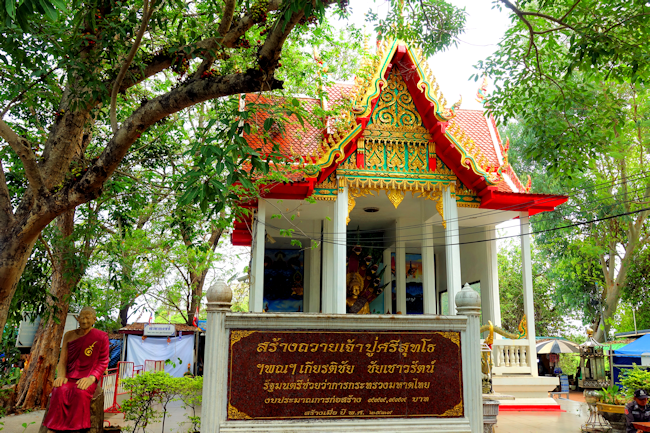
The Shrine of Naga Lord Sri-Sudtho, commonly known as Kham Chanod Forest (Wang Nakin Kham Chanod), is a deeply sacred site located in Ban Dung district, Udon Thani Province, Thailand.
It is regarded by locals as a mystical “gate” connecting the human world with the mythical Naga realm, specifically the domain of Naga Lord Sri-Sudtho and his consort, Ya Sri Pratumma.
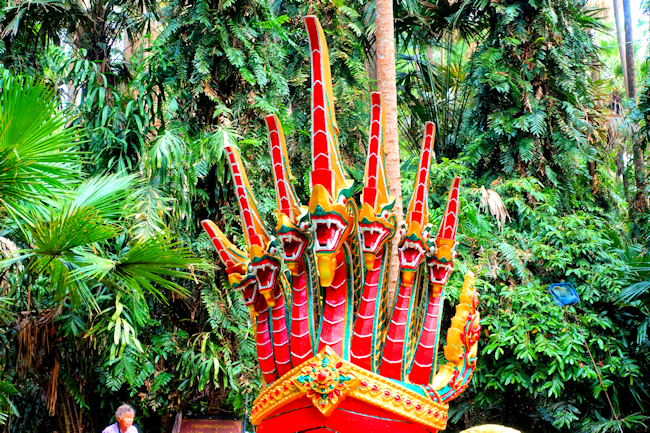
The Naga Realm: Known as the “residence of the serpent,” it is believed to be the only gate connecting the human world to the Naga realm.
The Naga realm (Naga-Loka or Patal Lok) is a mythical, subterranean, or underwater kingdom inhabited by divine, and semi-divine serpents.
In Buddhist and Hindu cosmology, it is a hidden world of immense wealth, jewels, and beauty, often associated with rivers, the Mekong, and deep-earth caverns.
Naga’s are considered protectors of the Dharma and guardians of water, fertility, and nature, possessing the ability to shape-shift into human form.
Key Aspects of the Naga Realm:
- Location and Appearance: Nagas reside in Patal Lok (the underworld) or deep, mystical water locations. The kingdom is described as having luminous palaces, with walls covered in gems and snake-scale patterns.
- Significance in Belief: Nagas are revered as beings possessing profound wisdom and magical powers. They are custodians of the Dharma in Buddhist traditions and are guardians of sacred sites.
- Cultural Connection (Thailand/Mekong): In Thai culture, the Naga is linked to the Mekong River and the “Naga Fireballs,” believed to be lights created by Nagas during the end of Buddhist Lent. The Naga realm is sometimes depicted as existing beneath the Mekong. (Naga Fireballs (Bang Fai Phaya Nak) are glowing, reddish orbs that rise from the Mekong River in Thailand and Laos, typically during the full moon in October/November ending Buddhist Lent. Celebrated annually in Nong Khai, the phenomenon is believed to be caused by mythical Naga serpents breathing fire.)
- Lineages: Naga legends include different types, such as the powerful golden Viroopaksa or the rare rainbow-colored Chappaya Putta.
- Accessibility: Humans can only access this realm through meditation, magical means, or by visiting specific sacred sites believed to be portals.
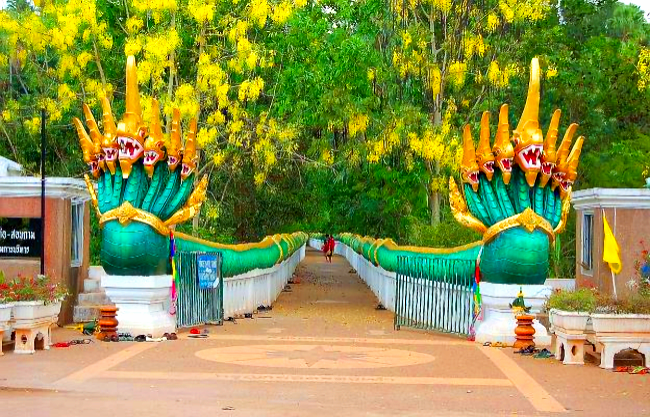
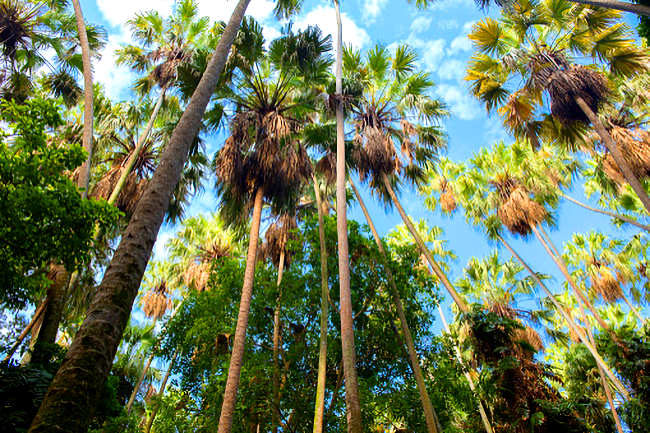
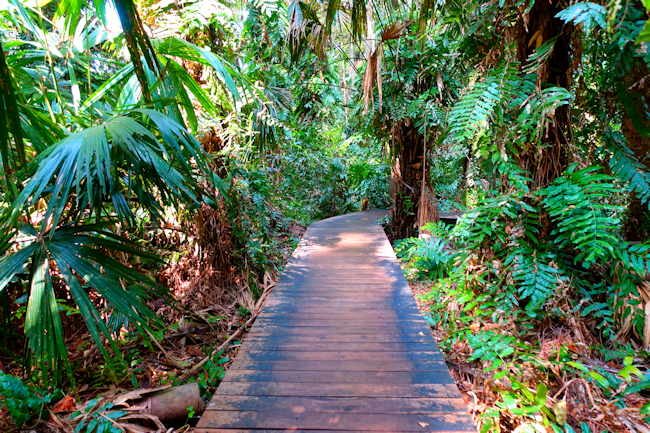
Unique Environment: The island is covered in Taraw Palm trees (a type of palm), which are not found elsewhere in the region, creating a naturally cool and mysterious, thick jungle atmosphere.
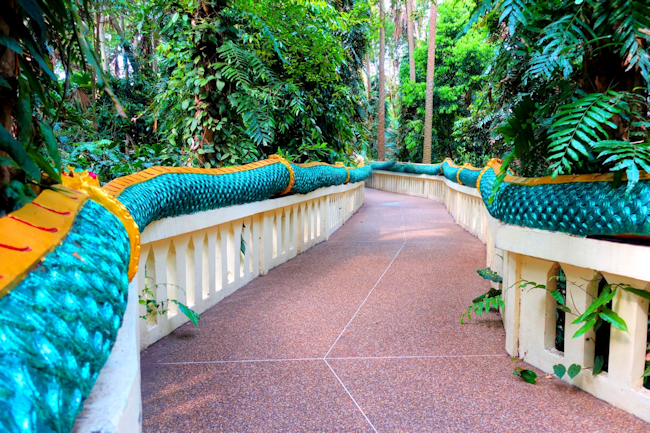
Wat Siriuttho (Wat Kham Chanod): The monastery on the site features a long, greenish Naga-decorated path that visitors walk barefoot into the palm forest. Visitors must remove their shoes at the entrance to this pathway.
Holy Well & Shrine: Features a shrine to Naga Lord Sri-Sudtho and a sacred well believed to have healing powers, connecting directly to the Mekong River.
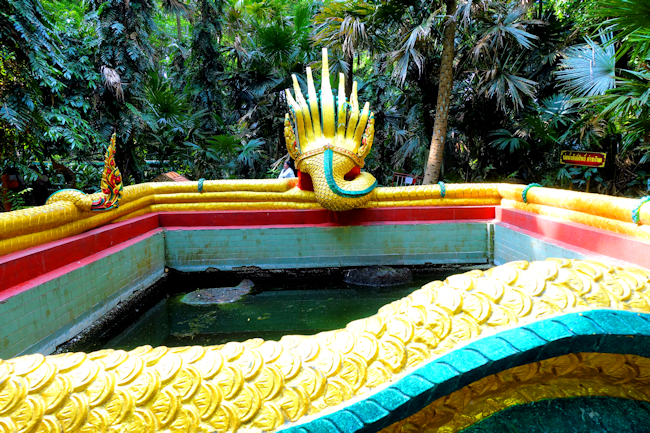
The Legend of Kham Chanot: The shrine is situated in a mystical forest surrounded by a lake, believed by locals to be a gateway to the underworld realm (Naga realm). Legend has it that two Naga kings, Sri-Sudtho and his consort Ya Sri Pratumma, rule this area.

The Creator of the Mekong: According to local folklore, Lord Sri-Sudtho is responsible for creating the Mekong River.
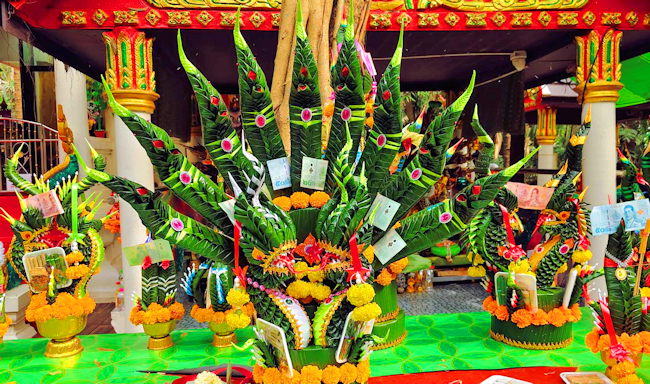
Worship and Beliefs: Visitors and devotees from Thailand and Laos visit the shrine to pay respects, seeking blessings of luck, wealth, protection, and prosperity. Balancing coins is a ritualistic act deeply rooted in local superstition, specifically aimed at securing good fortune, prosperity, and wealth.
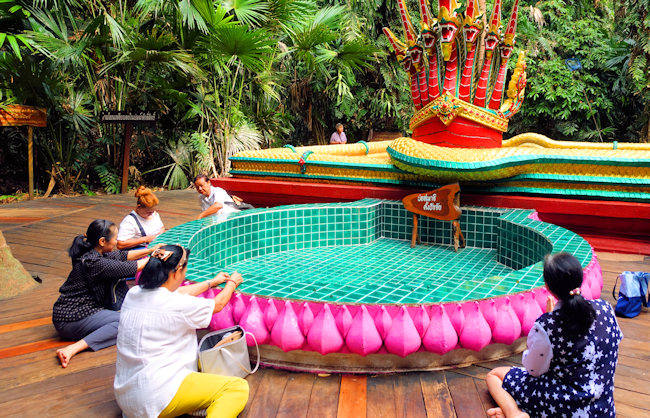
It is a popular spot for lottery seekers, often gathering around the “Chanot” trees (Taraw palms) or the holy well for auspicious signs and to collect water samples to bring home with them.
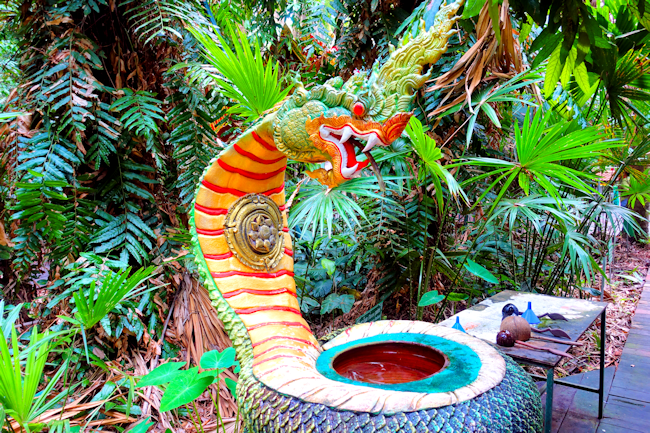
For many Thai people, a pilgrimage to Wat Kham Chanod is one of their most important wishes.
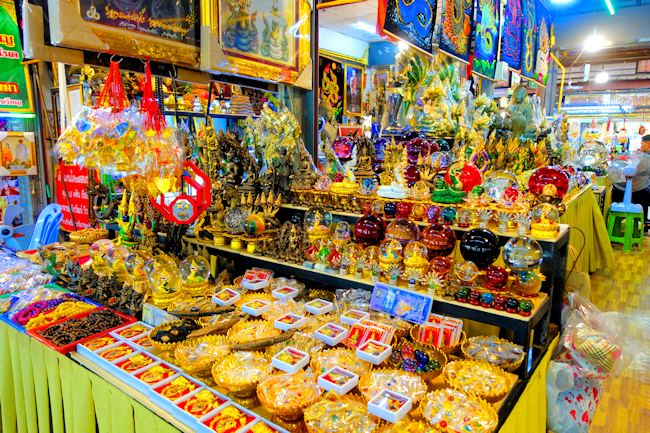
Admission is free, and you can buy blessings to donate at the Shrine.
There is also a food area where you can buy food and eat lunch.
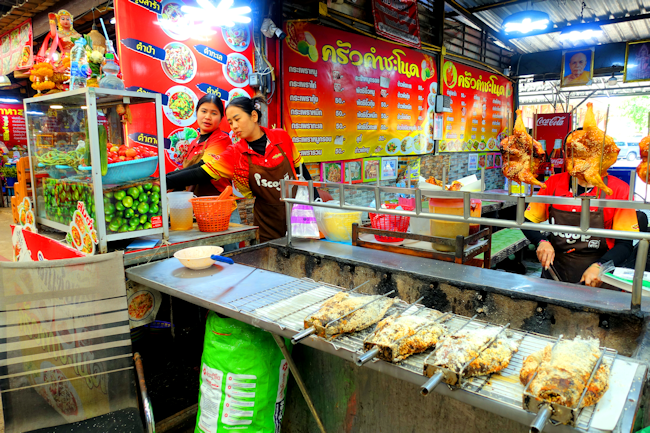
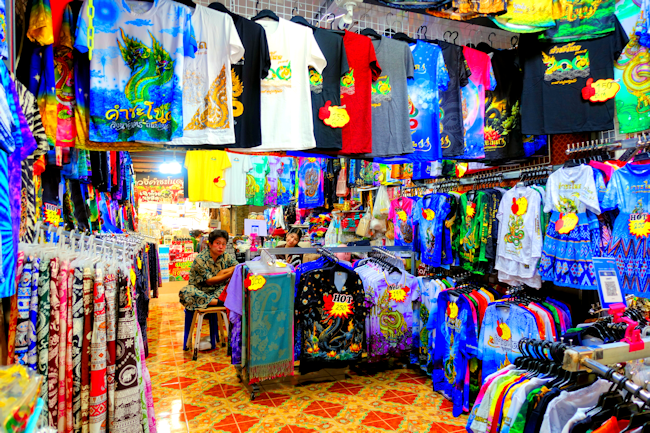
The grounds are heavily commercialized with shirts and all kinds of souvenirs for sale.
What a wonderful place! This was a great read and beautiful images!