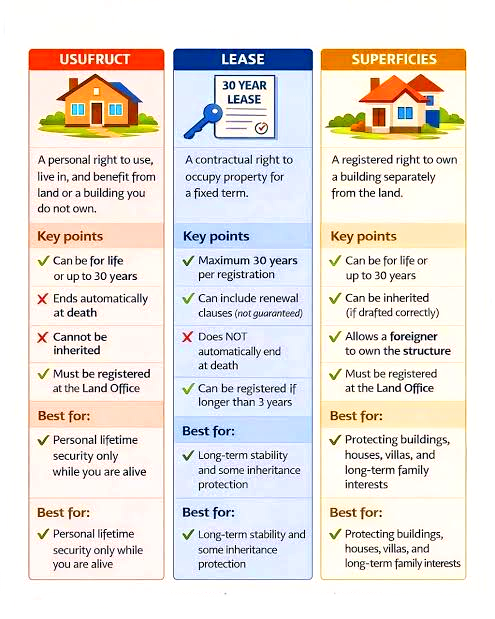

A Thailand usufruct (known in Thai as sidhi-kep-kin) is a registered real property right under Sections 1417 to 1428 of the Thai Civil and Commercial Code that grants a person (the usufructuary) the legal right to possess, use, manage, and enjoy the benefits of another person’s immovable property without holding the actual title.
This legal mechanism splits property rights into usage and ownership. The property owner remains the legal titleholder (often called the bare or naked owner), while the usufructuary gains full operational and residential control for an agreed period (30 years with possible renewal).
Key Characteristics of a Usufruct
- Scope of Rights: The usufructuary can live on the land, occupy the house, rent it out to others, and collect rental income or agricultural harvests.
- No Ownership Transfer: The usufructuary cannot sell, damage, alter the fundamental substance of, or permanently consume the property.
- Maintenance Duties: The holder must care for the property with the same prudence as an ordinary owner and pay any local property taxes or associated maintenance costs during their tenure.
- Non-Transferable by Inheritance: The right is strictly personal and cannot be passed down to the usufructuary’s heirs upon death.
Duration and Validity
- Fixed Term: Can be set for a specific period of time up to a maximum of 30 years (similar to a standard commercial lease).
- Lifetime Term: Can be drafted to last for the natural lifetime of the usufructuary (or multiple named individuals), expiring automatically upon their death.
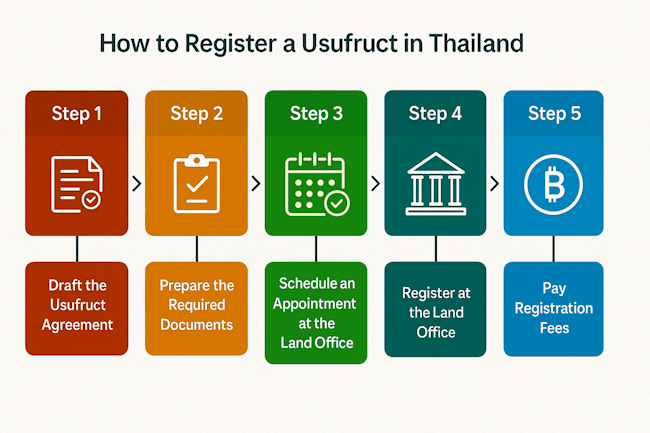
- Mandatory Registration: Per guidelines outlined by Thai Contracts, the agreement is only legally effective and binding against third parties once it is officially written and registered at the local.
Common Practical Uses
- Foreign Spouses: Frequently utilized by foreign nationals married to Thai citizens to secure a lifetime right to reside in a home registered under their Thai spouse’s name.
- Retirement Security: Allows retirees to guarantee long-term housing security without direct land ownership.
- Estate Planning: Parents can grant a usufruct to children or relatives to ensure a lifetime income stream or residence while transferring legal title beforehand.
Important Limitations
- Land Office Discretion: Registration depends heavily on the local land official, who holds the discretion to reject applications or question arrangements perceived as attempts to bypass foreign land ownership restrictions.
- Marriage Disclosures: As noted, a usufruct created between spouses during marriage may face specific limitations or cancellation challenges in the event of a divorce under Thai family law.
Foreigners married to Thai’s need to protect themselves and the Usufruct is an important way of doing just that.